he first time I ever wrote a song, it was complete and utter garbage.
I'll spare your ears (and my dignity) from having to hear the track yourselves, but the song was essentially a rip-off of Zach Bryan's "Something in the Orange," featuring clunky, depressing lyrics and vocal and guitar melodies so basic that, had I published it, it probably would have gotten me laughed off the internet.
But the moment I finished writing it was one of the proudest of my life. I still remember sitting across from my friend who wrote the song with me, smiling so broadly that our cheeks hurt.
The next song was better, and the next one after that even more so, honed with time, practice and tough love from my then-bandmates. I can genuinely say: I am glad I was bad at it.
I’ve been a musician for a lot of years. I performed with a choir for nine years, took band class and musical theater for five years apiece, and even had two years of opera training. While I went into a musical career with some raw talent, discovered by my mother at age two while singing along to The Doobie Brothers in the car, I've known time and time again what it's like to fail.
In the years that I've been reporting on AI, the word "democratization" has been thrown around a lot, often referencing the tech's ability to put the tools of knowledge and creation into anyone's hands. And though I won't deny that democratization is a real possibility, I can't help but think about what that means for humans mastering a craft.
When AI matches human capabilities of creation, it threatens to challenge the "uniqueness of human beings," Carmine-Emanuele Cella, a professor and composer who serves as co-director of University of California Berkeley’s Center for New Music and Audio Technologies, told The Deep View. As a composer himself, he said that the ability to compose a symphony for a large orchestra has made him feel special—like he could "do something nobody else could do."
Though Cella believes that AI can be an incredibly powerful assistant for musicians, when a machine does the creating entirely for you, "you kind of lose the special feeling," he said. "It's like playing against a gray entity that I will never be able to win against, and it doesn't make sense for me to play anymore."
And yes, it can be disheartening when AI can, on the surface, create a piece of music just as good, if not better, than you can, like you are David and the machine is Goliath. But I cannot help but be reminded of toiling over lyrics in the Notes app at 3 a.m, or times I pulled over my car to hum melodies into my phone, or sweating it out in a closet-turned-recording booth as I sang and re-recorded the same lines until I deemed them perfect.
With democratization as the driving force for developing AI creative tools, I can't help but wonder if generative systems cut us off at the knees by making things too easy. Will the instant gratification of AI stunt our creativity, kill our drive towards perfection by our own hands, blunt our desire to put in our 10,000 hours to become an expert?
Is it still important to be bad at something to appreciate how hard it is to be good?
On virtuosity
In AI's nascent state, it's entirely possible that the novelty of the tech will enable the human tendency to do things the easy way. Why would we not use a generative model to create viable lyrics from simple prompts, to turn our pitchy and flat vocals into something radio-worthy, or fill out our scratch acoustic demo takes with a full orchestra? This may be especially tempting as a dwindling pool of people are able to actually pick apart the difference between AI and authentic with the naked ear. As Armin van Buuren, a Dutch Grammy-nominated DJ and producer, told me, "It's very easy to be lazy."
But my perspective, however, could just be that of an anthropological pessimist—and a simplification of what it means to be a musician. For instance, Robert Prey, professor of digital culture at Oxford University, made the point that while AI could enable everyone to be a baseline decent creator of music, it still takes time, skill and drive to become a virtuoso.
AI "allows everyone to be good enough, not really good, but to be good enough," said Prey. "I still think there's a huge difference between a true musician creating a song and somebody who doesn't have that skillset or mindset that you'll find in a true artist."
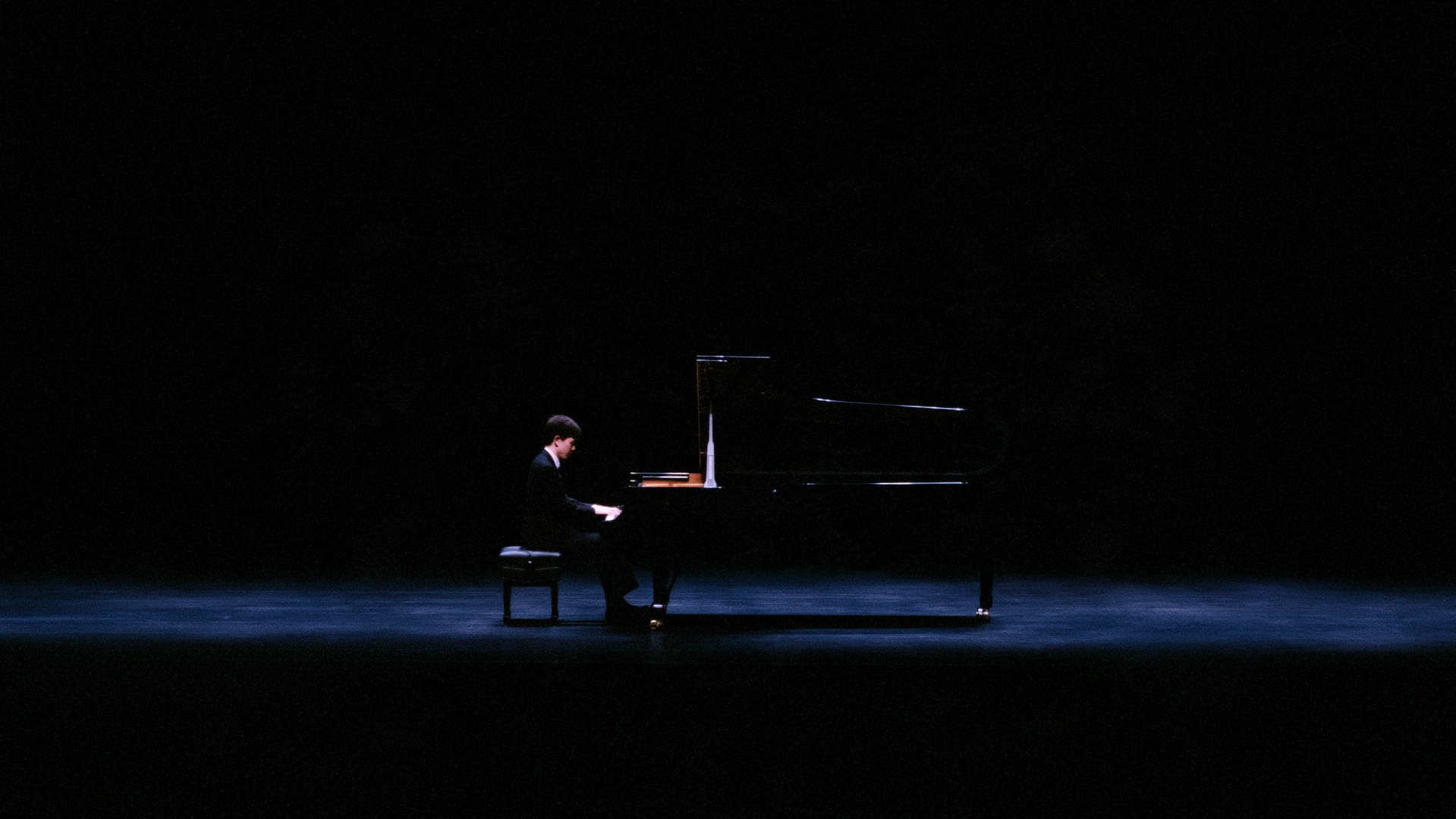
Additionally, learning an artistic discipline—whether that be an instrument, a performance art, or a physical artistic medium—isn't just about producing a better product. There is something deeply gratifying about knowing that you can create something with your own effort and imagination. To put down the palette or listen back to a recording and know that it came from you and no one (or nothing) else. To put your fingers on the keys of a piano and know that you are the reason that the notes are flowing out in perfect harmony with one another.
Though AI may sidetrack that desire by giving us the ability to mimic virtuosity, said David Das, vice president of the Society of Composers and Lyricists, humanity will always find a way back to its spirit.
Virtuosity is "at the core of our creativity," Das told me. "It's the core of us: Having ambitions as human beings, to be better and to try and be the best at something, and to do something in that search for significance. I think it's a part of everybody's DNA. I don't think it'll fully go away."
On feeling
Being a musician is about more than simply creating music that sounds good. If that were true, then only the best of the best would bother making music at all. The deeper reason we make music is to unearth something about ourselves.
I want you to think about your favorite song. Think about who you were when you first heard it, and why it resonated with you. What made it stick?
Mine is "Shake It Out," a 2011 hit by Florence + The Machine. Florence Welch's soaring vocals, her masterful lyrics, the growing crescendo of the background instrumental all together paint a picture of triumph, of letting go of your demons, of literally shaking the devil off of your back to rid your body of whatever emotional torment you may be facing.
Beautiful as it is, those are not the reasons that "Shake It Out" is my favorite song. It is because of who I was when this song found me: a sad, scared teenage girl who needed someone to tell her to stand up. It's a song I've returned to many times in the decade and a half since it arrived when I've needed that message, through loss and failure and heartbreak, screaming it like a banshee while I grip the steering wheel of my car.
What gets me about this song has nothing to do with any of its technical elements. Rather, it's the feeling.
The reason that we create music is the same reason why we listen to it: to be heard, to understand, to commiserate. To feel human. The emotions that drive us to listen to Phoebe Bridgers or Elliott Smith when we're blue are the same emotions that drove those artists to create their music in the first place.
As Prey put it, "Most musicians don't play music in order to have a career, or especially not to be famous. Most musicians create music because they want to express themselves, and they want to master something."
On the future
To create art, music, literature, is to channel feeling and hone it into a fine point. In that sense, AI isn’t creating art at all. It’s simply tracing the outline of what it means to be human. It can mimic human feeling, as Anthropic has shown in its study of its flagship chatbot Claude, but these aren't on par with human emotions.
In order to continue to trace its outline with high fidelity, it needs something to trace. It needs a constant stream of fresh data to produce outputs that match or mimic human quality.
Though synthetic data could remedy this in theory, if it's only fed its own outputs, the quality of these models degrades. One study conducted by researchers at universities in the US and China and published in the Management Science academic journal in May found that training a large language model on AI-generated data reduced model performance compared to using authentic, human-created data. Though techniques like using outputs from multiple models and using only the highest-quality synthetic data helped its performance, it didn't entirely close the gap.
To put it frankly: If AI killed art, AI would in essence be killing itself, dooming its consumers to a future of listening to the same four-chord pop tracks on repeat—at least when it comes to music. And that's not an outcome that anyone wants. Not the artists, nor the labels, nor the companies making AI itself.
Jeff Chang, director of product management at Google DeepMind who works on Lyria, told The Deep View that the point is explicitly to not "regurgitate old things," but rather to offer a creative tool that helps artists create "emotional resonance."
"I think it is a sensitive space, and people care deeply about it," said Chang. "I've always felt like music is special. It's very emotional when people connect with music, and it's all about the emotional resonance at the end of the day."
In reality, the future of AI and art is entirely dependent on your view of humanity.
Yes, if you take AI's capabilities to the worst-case scenario conclusion, humans will no longer feel the drive to create art because AI can do it for them, potentially better than they can. We will no longer have the desire to struggle, but will instead become comfortable taking the path of least resistance, and will never reach our fullest potential as artists. In turn, we will lose an essential outlet that has allowed humanity for millenia to channel emotion, understand ourselves and society, and pass on traditions and connect globally and intergenerationally—and instead settle for homogenous slop churned out at the pace of prompting. But that conclusion requires us to give in, to accept the premise that we will allow that to happen.
As an artist, and as a human, I simply don't think we will accept that as our fate. Instead, we will keep making music, both with AI and without it, adapting in the same way that generations before us have adapted to every technological revolution in the production of music, from AutoTune stretching all the way back to the phonautogram that created recorded music in the first place, and the printing press that allowed music to be published and shared at all.
Humans will never stop creating art, because humans will never stop being human.
Additional reporting and editing by Caitlin Wolper Phillips
This is part three of The Deep View's three-part series on AI and music. Don't miss: